
If you are sourcing a charger, a power bank or a cable, the OEM-or-ODM question settles three things before price ever comes up: who owns the design, who carries the certification, and how much you can still change after the first order.
Most articles answer this with definitions. This one answers it with a decision table, the four cost drivers that actually move, and the cases where ODM is the only workable route — including the ones where no off-the-shelf unit can be made to fit at all.
What OEM and ODM Actually Mean
OEM means the brand owns the design and the factory builds to it. The factory is the OEM; the brand is the buyer. ODM means the factory owns the design platform and builds it to the buyer's requirements.
The line is easy to see in phones. Apple designs the iPhone. Foxconn builds most of them, and Apple decides when the product ships, what it costs and where it sells. Foxconn never touched the design.
OEM looks cheaper on paper and often is not, because design ownership is a permanent cost. You carry the schematic, the layout, the firmware, the test file and every future change. A factory can build a design it did not create, but it cannot improve one it does not understand, and the moment your design needs a second source or a cost-down, that gap becomes the bottleneck.
ODM works the other way round. The platform already exists before you arrive, and you specify what changes on top of it.
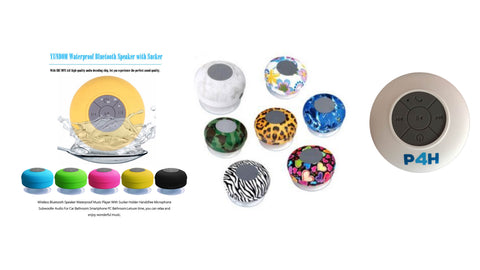
Take a case we run ourselves. A buyer looked at a Bluetooth speaker we already produce and said the front face was too plain for their market. They wanted a different grille and their logo on the body. We changed the appearance, kept the acoustic design, and shipped under their brand. That is ODM at its lightest: the design was ours, the requirements were theirs. The longer version of that route — inquiry to mass production — is set out in how a custom project actually runs.
OEM vs ODM vs Private Label
Private label is not a third model. It describes who the product is sold under, not who designed it. A private-label product can be either OEM or ODM.
Confusing the two is the most common reason buyers end up paying for tooling they did not need. If the change you want is a label, a colour and a retail box, you are buying assembly and packaging, not development. If it touches the circuit, you are buying development whether or not anyone calls it that. The packaging end of that is covered under private label programmes.
Decision Table: Standard Product, OEM or ODM
| Catalog product | OEM | ODM | |
|---|---|---|---|
| Design owner | Supplier | You | Supplier, built to your spec |
| What you can still change | Logo, packaging | Anything you designed | Anything the platform allows, plus new tooling |
| Who owns certification | Supplier | You, on your design | Supplier, but every change triggers re-testing |
| Lead time to first shipment | Shortest | Longest — design, tooling, then tests | Shortest route to a non-standard spec |
| Best fit | Testing a market | A design you can defend | Specs no catalog unit covers |
A catalog unit can be re-labelled. It cannot be re-engineered. The difference shows up at the certification stage, not at the quotation stage.
If you already know which row you are in, the OEM and ODM service sets out what each track asks of you before work starts.
When ODM Is the Only Option
Five situations leave no catalog option.
1. Mains conditions no unit was built for. 100 / 110 / 120 / 220 / 230 / 240 V, 50 or 60 Hz, or a wide 90–264 V input with a hold-up time requirement that rules out standard bulk capacitance.
2. Outputs outside the catalog. AC output, pure sine versus modified sine, 140 W and above, or multi-port units that need power split dynamically instead of equally.
3. Environment. High ambient temperature, continuous derating, dust, humidity or vibration that a consumer enclosure will not survive.
4. Integration. DIN rail or cabinet mounting, terminal blocks, industrial connectors, or an isolated output that the buyer's own equipment requires.
5. Market coverage. One unit that has to carry PSE, KC, SAA and UKCA at the same time — a combination no catalog SKU was ever tested for.
Each of these is a change to the design, not to the label. That is where ODM starts.
There is a quick test if you are unsure which side you are on. Can the change be made without touching the circuit? If yes, it is a label change and any assembler can do it. If it touches the power stage, the isolation distance, the thermal path or the firmware, it is a design change, and the supplier has to own it.
What Actually Drives the Cost Difference
Four things move the price, and only one of them is the unit cost.
Tooling — moulds and jigs. Paid once, by the buyer, and it stays with the tool rather than the order. Range: 【your tooling cost range】.
NRE — schematic, PCB layout, firmware, and the sample iterations behind them. This is where a "small change" stops being small. Moving the protection scheme or the port controller means a new layout, not a revision.
Certification — per market, per change. A revised design does not inherit the old report; it re-enters testing. Budget 【your certification lead time】 and 【your certification cost range】 per market.
Volume — the MOQ ladder. Below the first breakpoint you are spreading tooling and NRE across fewer units, which is why a 1,000-unit ODM run often quotes higher per unit than a 5,000-unit OEM run. Our own ODM floor sits at 1,000–3,000 units depending on the platform; under it, tooling and NRE spread too thin to hold the price down.
The hidden cost is the one nobody quotes: changing a certified design after launch. Every change re-opens the test file, and the market does not wait for the retest.
Trace one change to the end. A buyer asks for a 90–264 V input where the platform was built for 100–240 V. The transformer changes, so the bulk capacitance changes, so the inrush limiter changes. The wider range pushes creepage and clearance distances, which may move the primary layout, which re-opens the thermal design. One requirement, four follow-on changes, and the safety file no longer describes the build. That chain is what a quotation is pricing — not the transformer.
Who Owns the Certification
Under OEM, the design is yours, so the approval is yours. The factory supplies samples, test data and a production line that behaves the same way twice, but the certificate sits with your entity and your design file.
Under ODM it looks simpler than it is. The platform may already hold reports for the markets you want, and that is real value. But a certificate is a property of a specific configuration, not of a product name. Change the transformer, re-route the primary side, widen the input range, raise the output rating or shift the switching frequency, and the parts of the file that depend on those decisions no longer describe what you are shipping.
What usually triggers a retest: magnetics, PCB layout, isolation distance, protection scheme, output rating, thermal design, and firmware that affects switching behaviour.
Which standards apply depends on the product and the destination. Chargers and adapters typically land on IEC 62368-1 for safety, plus the EMC and efficiency rules of each market, and what certification really requires covers the rest. Power banks add battery requirements, and UN38.3 applies to transport whatever the market. Portable units that deliver AC output bring the inverter itself into scope, and the scope is wider than buyers expect.
We do not guess at scope. Before a project starts, we map the design change to the test files it will invalidate and quote the retest alongside the BOM, so the approval cost appears in the business case rather than three weeks before launch. That work sits under compliance and certification support, and it begins before the first sample rather than after it.
How to Vet a Supplier in Seven Questions
Anyone can say they do custom work. These seven answers separate the ones who do it from the ones who say it.
- Have you built this before? Ask for a test report or a derating curve, not a catalog page. A photograph proves nothing.
- What is the change limit on your platform? What stays, what needs new tooling, what needs a new layout. A supplier who says "anything" has not understood the question.
- Which approvals do you already hold on this platform, and which come back to testing on my change?
- What are the price breakpoints and the MOQ at each one? A single MOQ number usually hides a ladder.
- Who owns the tooling and the design files, and what do I keep if we stop? Get this in writing before the first payment.
- What does the derating curve look like at the ambient temperature my product will actually run at?
- Can I see a redacted test report and speak to one customer in my category?
Two of these are worth more than the rest. Question 2 tells you whether the supplier has a platform at all, or is assembling other people's modules. Question 5 tells you what happens on the day the relationship ends.
A longer version of this list, with the answers that should actually worry you, is in eight questions to ask before choosing a manufacturer.
What Happens After You Approve the Spec
Five stages, and each one can end the project, which is why they run in this order.
1. Feasibility. We answer the spec before quoting it. Two or three points usually come back — a load type the platform cannot start, an ambient temperature that breaks the derating curve, a market whose requirements no existing report covers. Better here than after tooling.
2. Quotation. BOM, tooling, NRE, certification scope and the MOQ ladder, priced separately. One number hides the decision; four numbers let you make it.
3. Prototype and internal test. Samples you can load, measure and break. A prototype that only switches on is not a prototype.
4. Approval. The design goes to test for the target markets. Anything the file does not already cover is new testing, and the scope is agreed before submission rather than discovered afterwards.
5. Pilot, then mass production. A pilot run confirms the line behaves like the sample. Most of the problems that show up in mass production were visible in the pilot and were not looked at.
Frequently Asked Questions
1. What is the difference between ODM and private label?
Private label describes the brand the product sells under. ODM describes who owns the design. A private-label product can be made either way; the label does not tell you which.
2. Does an existing certificate cover a modified design?
Only the parts of the design that did not change. Once magnetics, layout, isolation distance, protection scheme, output rating or switching behaviour changes, the affected test clauses have to be re-run.
3. How long does a custom ODM power supply project take?
New ODM development runs 60–90 days from concept to first mass production, depending on the spec. A logo, colour or packaging change on an existing platform can ship in around 15 days. What you should ask for is a schedule with the test milestones marked on it, not a single number.
4. Who owns the tooling in an ODM project?
Whoever the contract says. Most buyers pay for the tool and therefore own it, but ownership of the drawings, the firmware and the right to move production elsewhere are separate questions and should be settled before the first invoice.
Next Step
Send us the spec you cannot source: input range, output, environment, target markets. You will get a feasibility answer and a cost breakdown, not a catalog page.
Not ready to quote yet? See how both development tracks run — requirements, prototyping, tooling, certification and delivery, stage by stage.